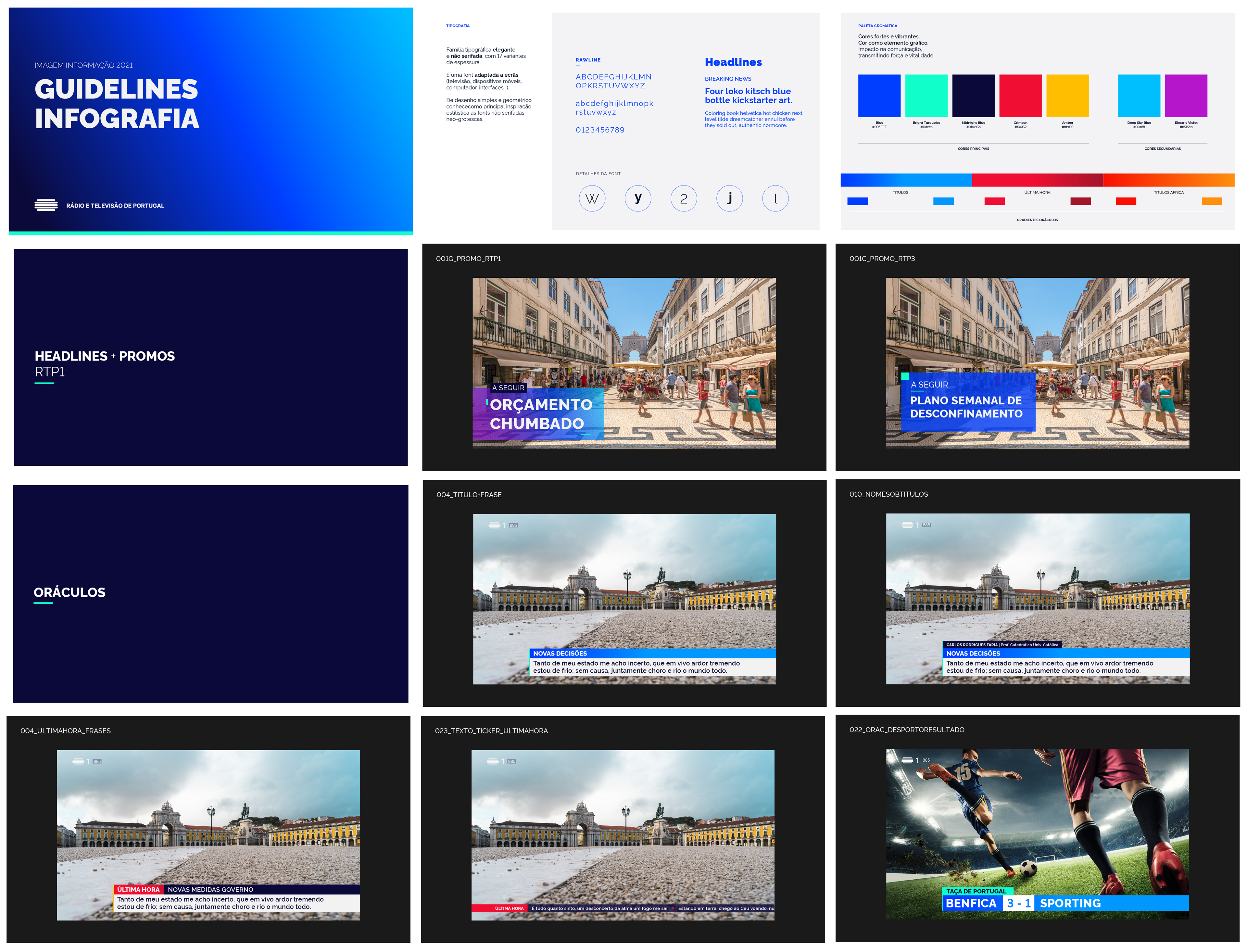
On-Air Graphics System

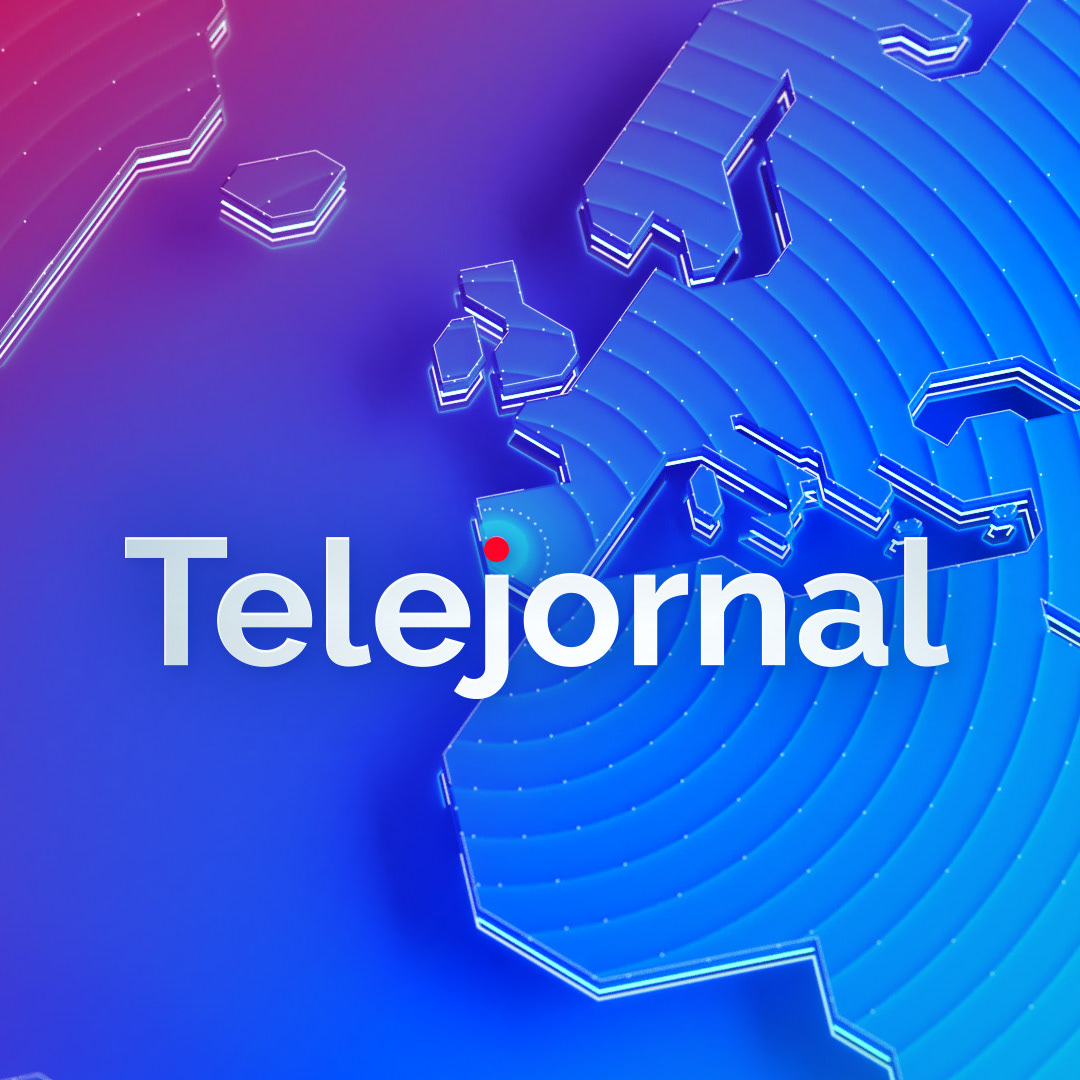
RTP (Rádio e Televisão de Portugal) is Portugal's public service broadcasting organization, operating four national television channels, three national radio stations, and several satellite and cable offerings. Itsanashow Studio was commissioned to develop a comprehensive new visual identity for every newscast program across the network.
THE CHALLENGE
The new identity needed to reflect RTP's evolving editorial strategy: forward-looking, dynamic, and youthful, while streamlining operators' live production workflows and maintaining full visual coherence across all broadcast formats and platforms.
This case study is presented across five chapters: Teaser · Openers · On-Air Graphics · Infographics · Studio Ledwall Backgrounds. Focusing here on the On-Air Graphics System, the lower-thirds, program logos, and live broadcast elements designed to inform clearly and move fluidly on screen.
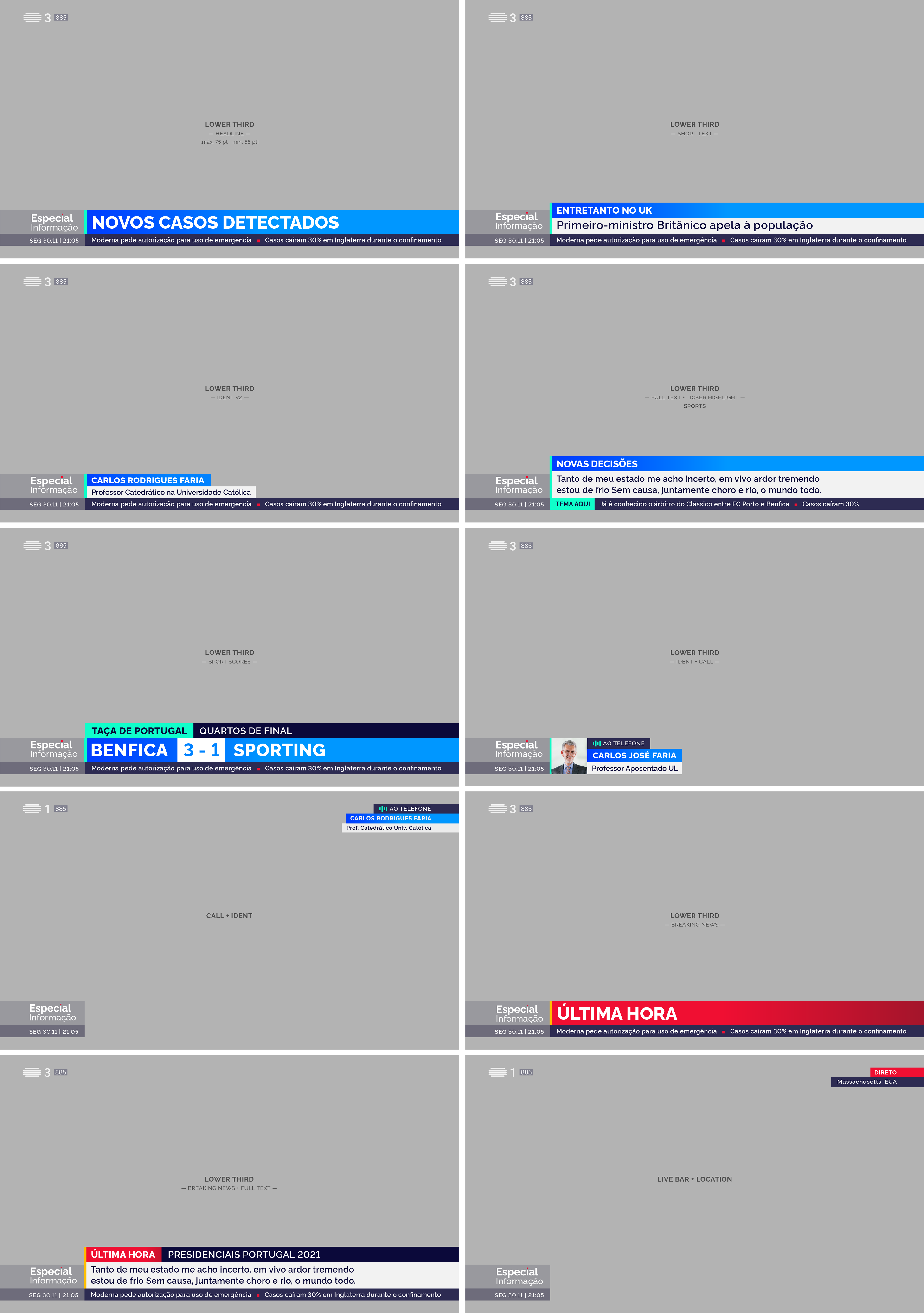
Lower-Third System
THE SOLUTION
The on-air graphics system was designed around a core principle: use the full width of the screen. By embracing the horizontal frame, we created lower-thirds and on-screen elements with greater visual presence, using color and spatial hierarchy to clearly distinguish between different types of information depending on context and priority.
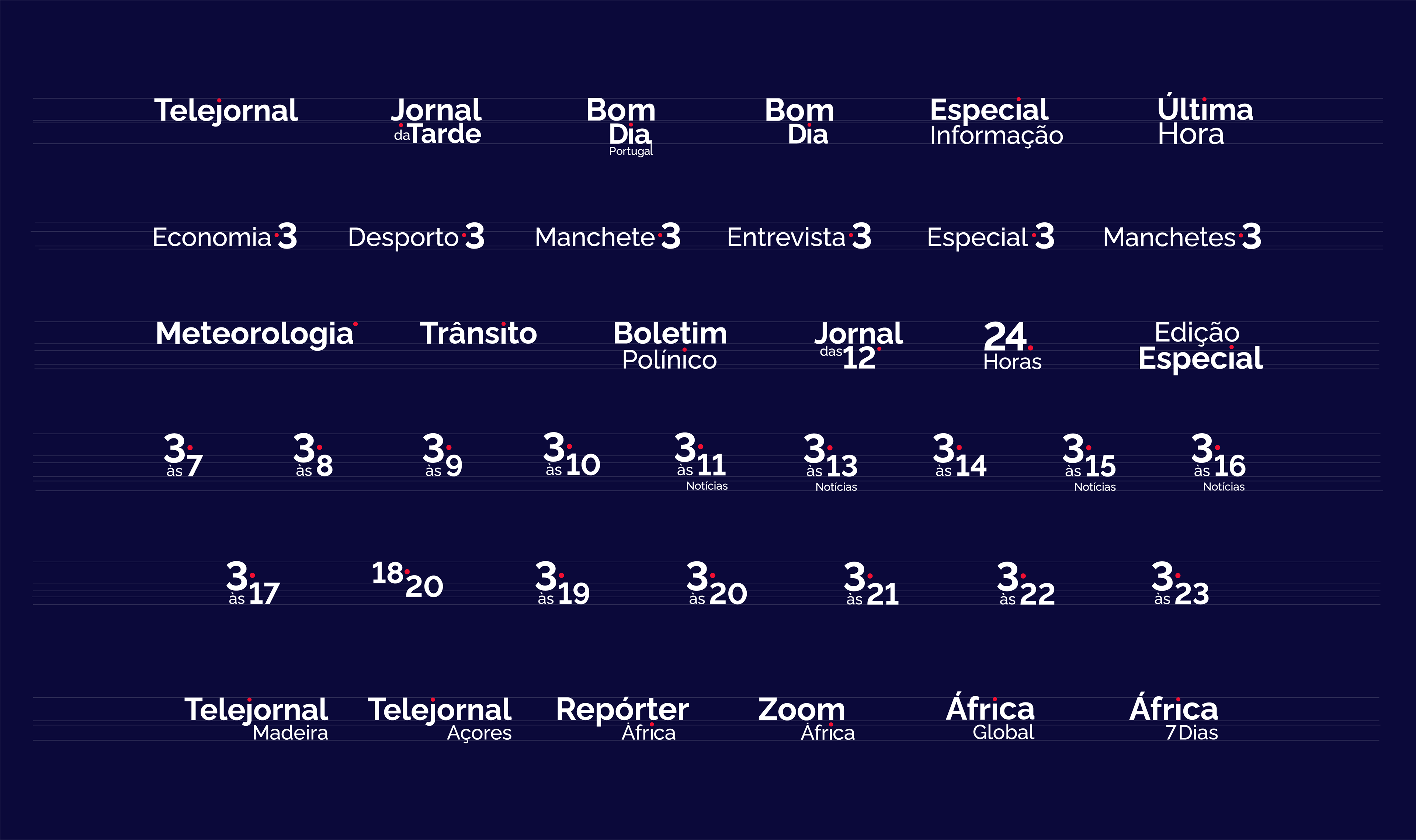
Each program logo was integrated directly into the lower-third system, ensuring that viewers always know which RTP program they are watching — even when switching between channels. This consistent branding approach gives the entire network a strong, cohesive on-air identity that is unmistakably RTP.
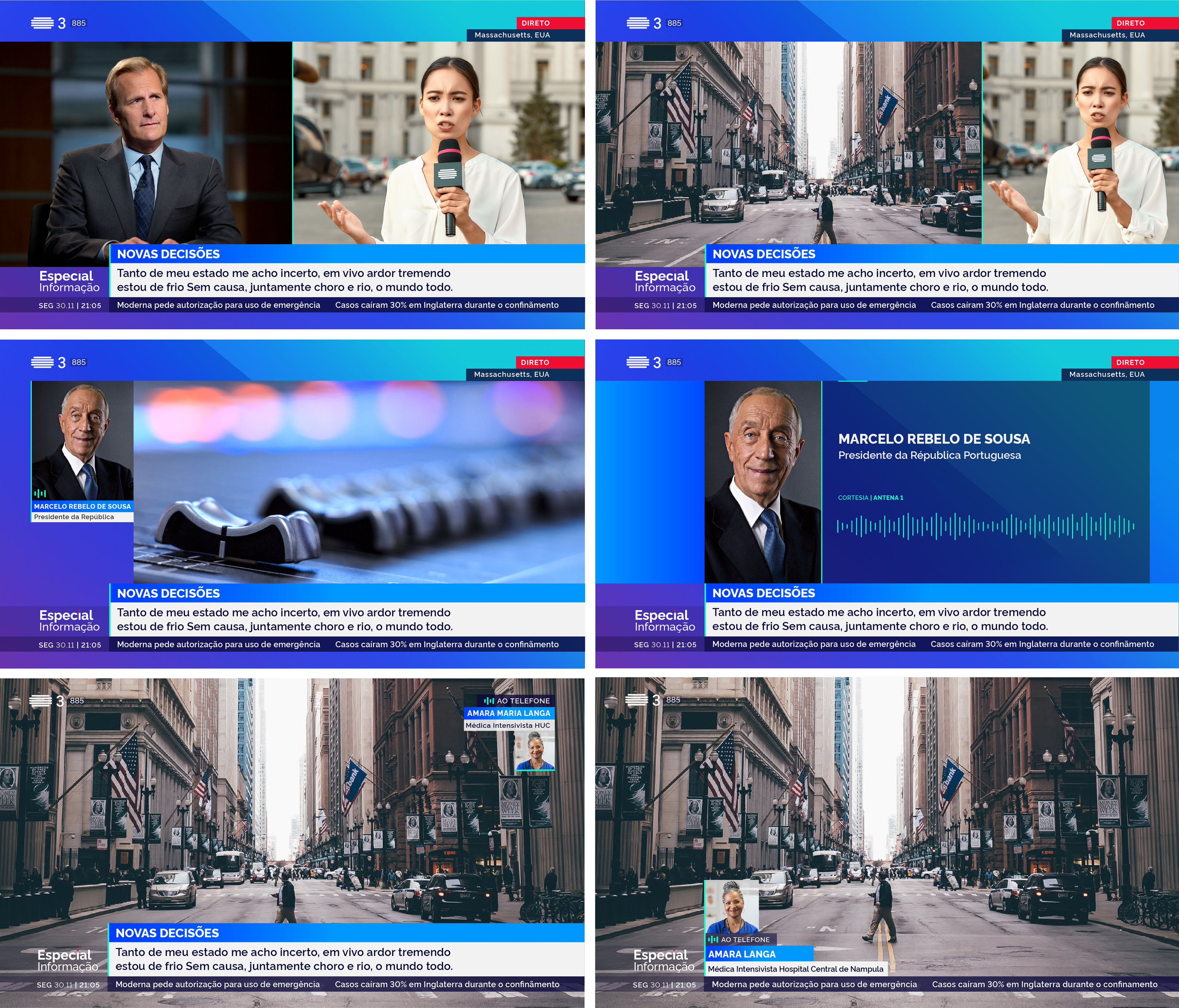
Motion was treated as a language in itself: dynamic and fluid, but never intrusive. Transitions were designed to support the reading flow, guiding the viewer's eye without competing with the news content or the anchor's delivery.
Accessibility was a fundamental consideration throughout. Element contrast, font sizing, and the positioning of sign language overlays were all carefully considered to ensure the system works for every viewer.
One distinctive innovation was the inclusion of the time, day, and date directly within the lower-third system. This decision was driven by two distinct but equally human considerations: supporting viewers with cognitive conditions such as dementia, who benefit from consistent temporal orientation during their daily routines, and ensuring that news clips retain their context when shared and viewed in isolation on social media platforms. A small design detail with meaningful real-world impact.
Finally, the full range of broadcast scenarios was mapped and designed to streamline the operators' live production workflow, giving the régie team a flexible, reliable system built for the pressure of live television.
On Air in Action

Design Guidelines